
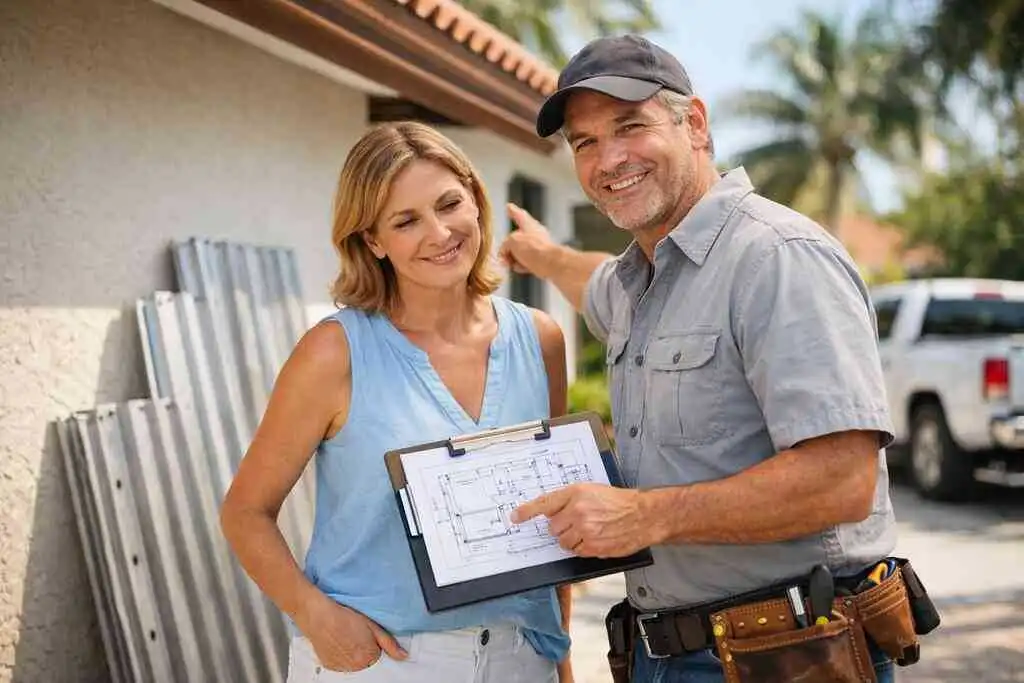
A homeowner in Boca called during a stormy afternoon, sounding tired and embarrassed. The quote looked good, the contractor sounded confident, and the work started fast. Then the permit questions began, and everything slowed to a crawl. If that knot in your stomach feels familiar, you are not alone.
That feeling is common in South Florida. A low number can hide a lot of risk. For exterior and structural work, the wrong hire can trigger delays, failed inspections, or a project that should never have started. This is exactly why the difference between a licensed and bonded contractor matters so much here.
Most people assume a good quote means safety. It does not. In South Florida, you need a contractor who understands permits, insurance, and hurricane-code realities. That matters whether you are planning a home remodeling contractor South Florida project, a roof replacement, or a small addition.
The mistake that turns a simple hire into a permit nightmare
Why licensed contractor Florida status is not the same thing as being bonded
A licensed contractor Florida has met state or local requirements to perform regulated work legally. A bonded contractor Florida has a surety bond in place, which can help protect you if the contractor fails to meet certain obligations. Those are related, but they are not the same. You should keep both in mind.
Here is the part most homeowners miss: licensing speaks to qualification and legal authority. Bonding speaks to financial protection if something goes wrong. One does not automatically replace the other. That distinction matters even more when you are hiring a licensed contractor Palm Beach County, a licensed contractor Broward County, or a licensed contractor Miami-Dade job lead.
A homeowner in Coral Springs once told us the contractor “looked official” because he had a business card and a polished estimate. The paperwork still lacked the details needed for a permit submittal. The job paused for weeks. The lesson was painful, but simple: confidence is not documentation.
What South Florida homeowners think a good quote guarantees and why it does not
A good quote can tell you price, scope, and maybe scheduling. It does not prove licensing, insurance, or bond coverage. It also does not prove the contractor understands the South Florida permit process. That is a major difference in this market.
Many homeowners assume the lowest bid means the best value. Often, it only means fewer protections. A contractor can quote a pool deck, a bathroom, or a roof and still miss critical details. That is especially risky for South Florida contractors handling exterior work, because hurricane-code requirements can change the scope quickly.
If you are comparing quotes for a general contractor in South Florida project, ask what is included and what is excluded. Ask who pulls permits. Ask who handles inspections. Ask who is responsible if a plan revision is needed. Those questions may feel uncomfortable, but they save money.
When a general contractor near me South Florida search still leaves the real risk unchecked
Typing general contractor near me South Florida or find a contractor South Florida can give you names quickly. Search results cannot tell you whether someone is properly licensed, insured, or bonded. They also cannot tell you how that contractor handles change orders, lien waivers, or county-specific approvals. That is your job to verify before money changes hands.
Here is what we see on the projects we’ve finished this year. The biggest problems usually start before demolition. A homeowner hires fast, trusts the quote, and assumes the paperwork will “work itself out.” Then the permit office asks for missing documentation. The entire schedule shifts.
For specialized work, the risk climbs again. A roofing contractor South Florida project has different concerns than a South Florida kitchen remodeler or South Florida bathroom remodeler. If your project touches structure, moisture protection, or exterior openings, licensing and bonding are only the beginning. You also need someone who understands local approvals and inspection sequencing.
The paper trail that separates a real pro from a risky shortcut
How to verify a contractor license before any money changes hands
Start with the license itself. Do not rely on a logo, a truck wrap, or a sales pitch. Use the official state or county lookup tools and confirm the contractor name, license status, and trade classification. If you need a quick starting point, review how to verify a contractor license before you sign anything.
Verification should take minutes, not days. Match the business name, the owner name, and the expiration status. Then check whether the company is allowed to perform the exact work you need. A contractor can be legal for one scope and not another. That matters for a South Florida custom home builder, South Florida concrete contractor, or South Florida flooring installer.
A simple checklist helps:
- Confirm the license is active.
- Confirm the trade matches the project.
- Confirm the company name matches the quote.
- Confirm the contractor can pull the needed permit.
- Confirm there are no obvious disciplinary issues.
That five-minute habit can prevent a five-week problem.
What contractor insurance requirements Florida homeowners should confirm for residential work
Insurance is not a technicality. It is part of your protection. Contractor insurance requirements Florida homeowners should confirm usually include general liability and workers’ compensation, depending on the contractor’s setup and the work being performed. If a worker gets hurt or property gets damaged, you want to know the contractor is carrying the right coverage.
Do not accept a vague answer. Ask for a certificate of insurance. Confirm the policy is current. Confirm the business name on the certificate matches the company bidding your work. If you are hiring for a South Florida home additions project, or a larger home addition contractor in South Florida scope, this matters even more because more trades and more exposure are involved.
A homeowner in Delray once asked why we were so strict about paperwork before cabinet installation. Then a delivery mishap damaged flooring and wall finishes. Insurance and clear responsibility kept the repair from becoming a personal dispute. That is the quiet value of paperwork. It feels slow until something breaks.
How contractor bonding requirements and lien waiver Florida paperwork protect your property
Contractor bonding requirements exist to add another layer of financial security. A bond is not a magic shield, but it can help protect you if the contractor does not fulfill certain obligations. It can also matter when public agencies or larger projects require extra assurance. For many homeowners, the bond is part of the trust package, not the whole package.
Then there is the lien waiver Florida paperwork. A lien waiver is a document showing a contractor or supplier has been paid for work or materials. That matters because unpaid parties can sometimes claim a lien against the property. You do not want that surprise after a remodel.
DocumentWhat it helps withWhy it matters to youLicenseLegal authority to perform the workConfirms the contractor can do the jobInsuranceDamage and injury protectionReduces your exposure if something goes wrongBondFinancial backing for certain failuresAdds another layer of protectionLien waiverProof of payment statusHelps protect your property from claimsAsk for these documents early. Keep copies. If the contractor resists, that is useful information.
When the job crosses into hurricane code compliance and structural risk
Why roofing contractor South Florida projects need extra scrutiny after storm seasons
A roof in South Florida is not just a roof. It is part of your home’s defense system. After storm seasons, a roofing contractor South Florida job should be reviewed with more scrutiny, not less. Water intrusion, hidden deck damage, and fastening requirements can all change the scope.
If the estimate sounds too simple, be careful. Roof work may involve decking replacement, flashing, ventilation adjustments, and inspection timing. It may also involve hurricane roof tie-downs, depending on the structure and scope. A contractor who glosses over those issues may be underbidding the real work.
Here is what almost no online guide mentions: the cheapest roof quote can become the most expensive path if it fails inspection twice. That delay costs time, labor, and patience. It can also create temporary exposure if weather turns before the work is signed off.
What changes for hurricane impact window installer South Florida and hurricane shutter contractor work
Windows and shutters are not simple finish items in this region. A hurricane impact window installer South Florida homeowner hires must understand product approvals, framing conditions, and installation details. A hurricane shutter contractor needs the same level of precision. The opening has to be prepared correctly before the product can perform as intended.
That is why you should never treat impact products like ordinary replacements. The rating, fastening pattern, and surrounding structure all matter. If the install is wrong, the strongest window in the catalog will not perform as designed. And yes, that still applies whether you are in a coastal condo, a townhouse, or a single-family home.
If your project also includes a South Florida HOA permit, coordinate early. Some associations want submittals before installation begins. Others want product approvals and color details before you order anything. Start that conversation early, or your delivery may sit in a warehouse.
How hurricane roof tie-downs, South Florida building codes, and Florida Building Code 2026 shape exterior upgrades
Exterior upgrades live under a stricter lens here. South Florida building codes are shaped by wind, moisture, and structural resilience. The Florida Building Code 2026 framework adds another layer of expectation for proper compliance, especially on envelope and structural-related work. I am not giving code advice here, because specifics depend on the project and jurisdiction. Still, the direction is clear: exterior work must be documented carefully. That affects more than roofs and windows. It reaches lanai enclosures, screen rooms, and outdoor structures too. A screen enclosure contractor South Florida project may need engineering or permit review. A pool deck contractor South Florida or paver installation South Florida scope can also trigger drainage or structural questions. A South Florida concrete contractor or South Florida foundation repair specialist may need to coordinate with other trades. 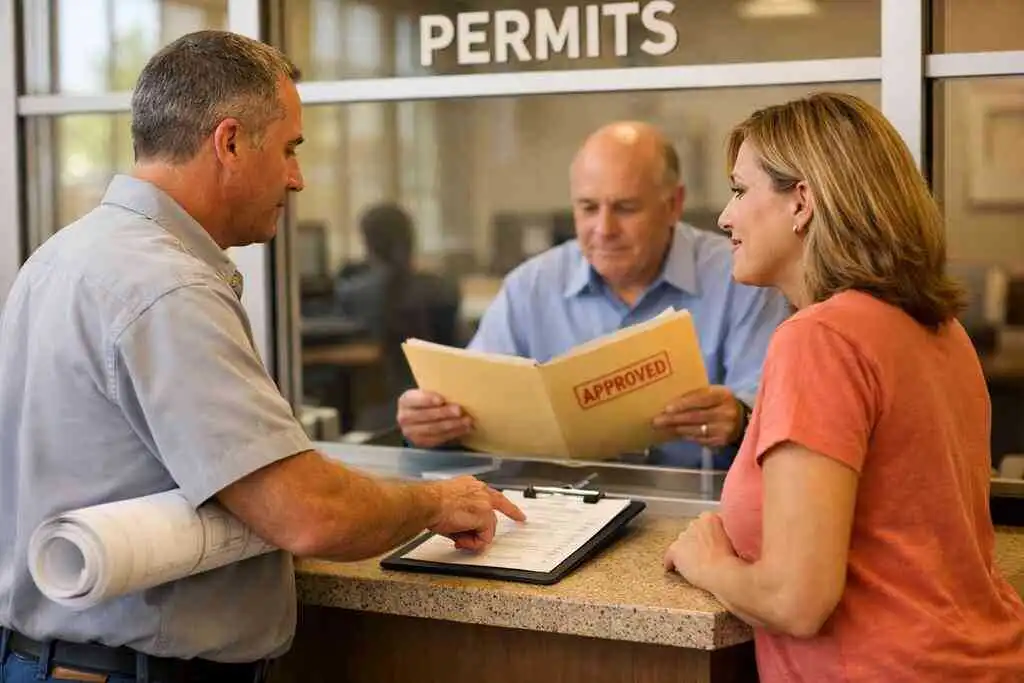
If you are building or upgrading near the coast, ask about hurricane code compliance in South Florida before design is finalized. That single conversation can prevent major redesign later.
Why county lines matter more than most people realize in South Florida
How Palm Beach County permit rules can differ from Broward County permit and Miami-Dade permit expectations
This is where many homeowners get blindsided. A Palm Beach County permit may involve different submission expectations than a Broward County permit. A Miami-Dade permit can be even more exacting, especially for wind-related work and product approvals. The work may look the same from the street, but the paperwork often is not.
That is why a contractor who is strong in one county may stumble in another. The approval sequence, review process, and supporting documents can vary. For a homeowner, that means local familiarity is not optional. It is part of the hire.
If you are comparing bids from a licensed contractor Palm Beach County and a licensed contractor Broward County, ask which jurisdiction they work in most often. Ask how they handle resubmittals. Ask who follows up with plan reviewers. Those small questions tell you a lot.
What changes for coastal home builder Florida and oceanfront home contractor projects near the water
Coastal work adds another layer of complexity. A coastal home builder Florida or oceanfront home contractor must deal with exposure, elevation, corrosion, and more demanding review conditions. Even when the home is not directly on the beach, water proximity can change design and material choices. Salt air is unforgiving.
A waterfront home builder South Florida should think about corrosion-resistant hardware, drainage, and moisture management from day one. That also affects a South Florida luxury renovation or South Florida custom home builder project, because premium finishes do not save a poorly detailed envelope. Beautiful materials still fail when water wins.
One waterfront client wanted a sleek outdoor kitchen with stone veneer and concealed appliances. The design was strong, but the exposure called for better fastening and more careful substrate prep. Fixing that early saved the owner from a painful redo later. That is the value of experience.
How HOA approvals and condo renovation South Florida rules can reshape the order of work
HOAs and condos change everything. A condo renovation South Florida project may require board approval, association rules, elevator reservation, work-hour limits, and noise coordination. A townhome remodeling South Florida project can bring shared-wall issues, access constraints, and community-specific requirements. Your contractor needs to know this before demolition starts.
The order matters. Some associations want approval before permit filing. Others want permit evidence before they issue internal authorization. Some require contractor insurance directly naming the association. That is why a South Florida HOA permit process can feel slower than expected.
If your project is a South Florida ADA renovation or an aging in place contractor South Florida scope, the approval stack can be even more detailed. Accessibility changes often require careful planning, especially in attached housing. Get the sequence right, and the job moves. Get it wrong, and your project sits.
The decision frame that keeps your remodel moving without expensive surprises
When to hire a South Florida design build team versus separate trades for a home remodeling contractor South Florida project
A South Florida design build approach can simplify complex work because one team handles design and construction coordination. That matters when you need a home remodeling contractor South Florida project to move through permits, selections, and field decisions without losing momentum. It can be especially useful for whole-home renovations, additions, and structural changes.
Separate trades can still work well for simpler jobs. But once the scope expands, coordination becomes its own job. That is where delays start. If your project includes an interior remodel plus exterior changes, a single accountable team may reduce friction. It can also make communication cleaner when the plan changes.
For example, a South Florida kitchen remodeler may need to coordinate plumbing, electrical, cabinets, and inspection sequencing. A South Florida bathroom remodeler may need to coordinate waterproofing, tile, and ventilation. A sunroom contractor South Florida, lanai builder South Florida, or outdoor kitchen contractor South Florida may need even more coordination with permits and structural details.
Why change order contractor Florida language matters before a kitchen or bathroom scope expands
A change order contractor Florida form is not paperwork fluff. It is the written agreement that captures scope changes, price changes, and timing changes after the work has started. If you add cabinet lighting, move plumbing, or upgrade tile after the contract is signed, the change order protects both sides. It keeps the project honest.
This matters most in kitchens and bathrooms. Those spaces hide surprises behind walls and under floors. A South Florida kitchen remodeler may uncover outdated wiring. A South Florida bathroom remodeler may find subfloor damage or hidden leaks. When that happens, the contractor should document the change clearly, not improvise in the dark.
One couple in Lighthouse Point wanted a simple bath refresh with new tile and a floating vanity. Once demo began, the subfloor told a different story. The change order explained the repair, the cost, and the added time. Nobody loved it, but everybody understood it. That is how disputes stay small.
How to choose the next right step for South Florida kitchen remodeler, South Florida bathroom remodeler, and South Florida home additions projects
Start with scope, not emotion. Write down exactly what you want fixed, built, or upgraded. Then decide which contractor category fits best. A South Florida kitchen remodeler is not always the right fit for a structural South Florida home additions project. A South Florida bathroom remodeler may be excellent inside the house but not ideal for exterior structural work.
Use this quick filter:
- Check the license.
- Confirm insurance and bonding.
- Ask who handles permits.
- Ask about county experience.
- Review the change order process.
- Get lien waivers with payments.
For larger projects, a South Florida custom home builder, South Florida sustainable home builder, or energy efficient remodeler South Florida may make more sense than piecing together separate trades. The same is true for a second story addition South Florida project or a coastal home builder Florida scope. Bigger jobs need bigger coordination.
If you want a practical next step, compare three vetted local contractors and ask each one the same six questions. You do not have to solve the whole project today. Start with one phone call, one license check, and one permit conversation. That is how smart South Florida homeowners protect their homes and their budgets.
Frequently Asked Questions
Question: What is the difference between licensed and bonded contractor status, and why does it matter for South Florida contractors?
Answer: A licensed contractor Florida has the legal authority and qualifications to perform regulated work, while a bonded contractor Florida has a surety bond that can provide financial protection if certain obligations are not met. In South Florida, that difference matters because exterior, structural, and storm-related projects often involve permits, inspections, and hurricane-code requirements. A contractor can be licensed but not bonded, bonded but not properly licensed for your scope, or carry both protections in different ways. That is why homeowners should never rely on a polished quote alone. If you are comparing South Florida contractors for a roof replacement, addition, remodel, or exterior upgrade, always verify the license, ask about insurance, and confirm bond coverage when appropriate. South Florida Contractors helps homeowners find a contractor South Florida by making it easier to compare local professionals across Palm Beach, Broward, and Miami-Dade Counties, but you should still verify licensing and insurance before signing anything.
Question: How do I verify a contractor license before hiring a licensed contractor Palm Beach County, licensed contractor Broward County, or licensed contractor Miami-Dade?
Answer: The safest approach is to use official lookup tools and confirm that the license is active, the business name matches the estimate, and the trade classification matches your project. That is the heart of how to verify a contractor license. A contractor may be qualified for one type of work but not another, which is why this step matters for a roofing contractor South Florida, South Florida kitchen remodeler, South Florida bathroom remodeler, or South Florida home additions project. You should also confirm that the contractor can handle the South Florida permit process for your county, whether that means a Palm Beach County permit, Broward County permit, or Miami-Dade permit. South Florida Contractors is built to help homeowners narrow their search and connect with local professionals, but final verification is still essential. If the contractor is reputable, they should be ready to share license information, insurance documents, and a clear scope of work without hesitation.
Question: What contractor insurance requirements Florida homeowners should confirm for roof, window, or remodeling work?
Answer: For most residential projects, homeowners should confirm that the contractor carries the appropriate contractor insurance requirements Florida typically call for, including general liability and workers’ compensation when applicable. This becomes especially important for hurricane impact window installer South Florida work, hurricane shutter contractor projects, roofing contractor South Florida jobs, and exterior improvements that affect weather protection. Insurance does not replace good workmanship, but it does help protect you if property damage or a jobsite injury occurs. Ask for a current certificate of insurance and make sure the company name matches the contractor bidding your project. If your scope includes a South Florida kitchen remodeler, South Florida flooring installer, South Florida tile contractor, or South Florida cabinet maker, insurance is still important because multiple trades and deliveries can introduce risk. South Florida Contractors encourages homeowners to verify insurance before hiring any contractor, because peace of mind starts with documentation, not assumptions.
Question: Why are permits, lien waiver Florida paperwork, and contractor bonding requirements so important for the South Florida permit process?
Answer: Permits and paperwork are not extras in South Florida; they are part of doing the job correctly. The South Florida permit process can vary by county, and projects often need proper documentation before work can legally begin. A contractor who understands contractor bonding requirements, insurance, and lien waiver Florida paperwork helps reduce the chance of delays, disputes, or unwanted claims on your property. Lien waivers help show that workers or suppliers have been paid, which can protect homeowners during remodels and additions. This matters for everything from pool deck contractor South Florida work to paver installation South Florida, screen enclosure contractor South Florida, sunroom contractor South Florida, and lanai builder South Florida projects. It also matters for larger scopes like South Florida custom home builder, South Florida luxury renovation, or second story addition South Florida work. South Florida Contractors can help you find local professionals who understand permitting, but you should never skip permit review or assume paperwork will work itself out. For exterior and structural jobs, hurricane code compliance and South Florida building codes should always be part of the conversation.
Question: In The Difference Between Licensed and Bonded Contractors in Florida, how should I choose the right company for a South Florida home additions or design build project?
Answer: The best choice is usually the company that can show the right license, appropriate insurance, clear communication, and real county experience for your specific scope. For a home remodeling contractor South Florida project, South Florida design build services can simplify planning, permitting, and construction coordination under one team. That is especially helpful for South Florida home additions, coastal home builder Florida projects, waterfront home builder South Florida work, or oceanfront home contractor scopes where structural detail and hurricane-code requirements matter. You should also ask how change order contractor Florida paperwork is handled, because additions and remodels often uncover hidden conditions once work begins. A trustworthy contractor will explain how scope changes are documented and how contractor dispute resolution is handled if questions come up. South Florida Contractors exists to help homeowners compare options across South Florida, but we always recommend verifying licensing, insurance, and permit experience before moving forward. Whether you need a South Florida ADA renovation, aging in place contractor South Florida, sustainable home builder South Florida, or energy efficient remodeler South Florida, the right partner is the one who is documented, communicative, and prepared for local requirements.